Wear in mining
Few industrial environments are as severe as an ore beneficiation circuit. Mineral slurry — water loaded with hard particles — runs at high velocity through pumps, cyclones, piping and chutes, 24 hours a day. In metal alloys, even hardened ones, this flow carves grooves, changes internal profiles and forces component replacement at every shutdown.
Technical ceramics reverse that logic: at 9 Mohs and over 1,300 HV, alumina barely wears in contact with slurry. A wear-resistant ceramic lining multiplies equipment life by up to 10× and keeps the design geometry — preserving circuit efficiency between shutdowns.
Where ceramics are applied in mining
- Classification and desliming — lined hydrocyclones and micro-cyclone clusters, with tips and apexes in solid ceramic.
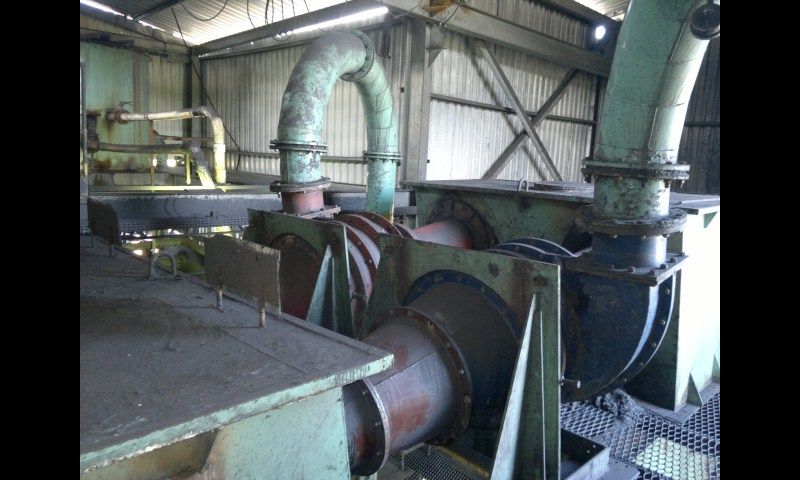
- Slurry pumping — pump casings, impellers and volutes protected against continuous erosion.
- Ore transport — piping, elbows, branches and chutes lined at the points of heaviest attack.
- Crushing and screening — chutes and points of material impact and sliding.
Components we supply
- Lined cyclones and hydrocyclones — body, cone, tips and apexes in CT CEDUR.
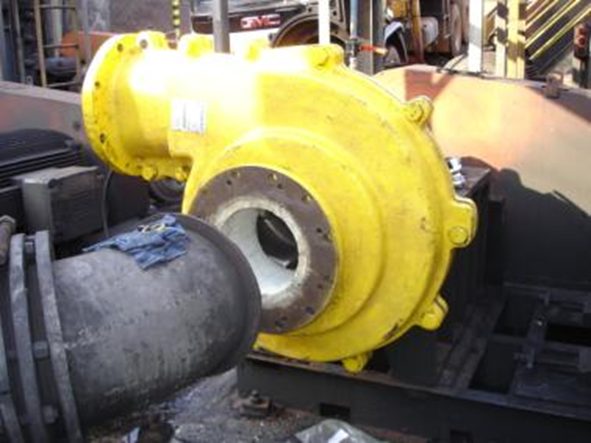
- Lined pumps — slurry-pump casings and components in solid ceramic.
- Ceramic-lined pipes and elbows — hydraulic and pneumatic ore conveying, pipe and flange in matching sizes.
- Custom linings — chutes, valves and any wear point of the circuit.
Major operations trust CETARCH: Vale, Anglo American, CMOC and Vale Fertilizantes are among the clients running CT CEDUR components.
Material: CT CEDUR alumina
Mining components use the CT CEDUR line — technical alumina sintered above 1,600 °C, virtually free of glassy phase. For abrasive slurry, the most used formulations are CT CEDUR 94HH (high abrasion) and 96HH (abrasion + impact from larger particles); engineering defines the composition from an analysis of your process.
FAQFrequently asked questions
Can ceramic withstand crushing impact?
For points with impact, CETARCH uses specific formulations such as CT CEDUR 96HH (severe abrasion + impact) and geometries reinforced where attack is worst. For extreme impact, engineering evaluates case by case the best combination of ceramic and damping, such as ceramic-in-rubber.
Do I need to replace equipment to use ceramics?
No. Ceramic parts are custom-made from the drawing or a reference part of your equipment — existing pumps, cyclones and piping receive the lining without changing the process.
What is the real gain over Ni-Hard?
The field benchmark is up to 10× the service life at the same wear point. Beyond durability, ceramic keeps the internal geometry — cyclones keep classifying at the design cut and piping keeps its section — reducing total cost of operation.