Why line piping with ceramic
In lines carrying mineral slurry, powder, ash or grain, the elbow is always the first to wear through: the outer radius takes the continuous impact of particles changing direction, and the metal loses thickness there long before the straight sections. Every hole is an unplanned shutdown — and replacing a whole line because of its bends is expensive in parts and in uptime.
A wear-resistant ceramic lining attacks the root cause: the hardness of alumina (9 Mohs, above 1,300 HV) virtually eliminates wall wear, and the low surface roughness cuts friction and material build-up, improving flow.
What we supply
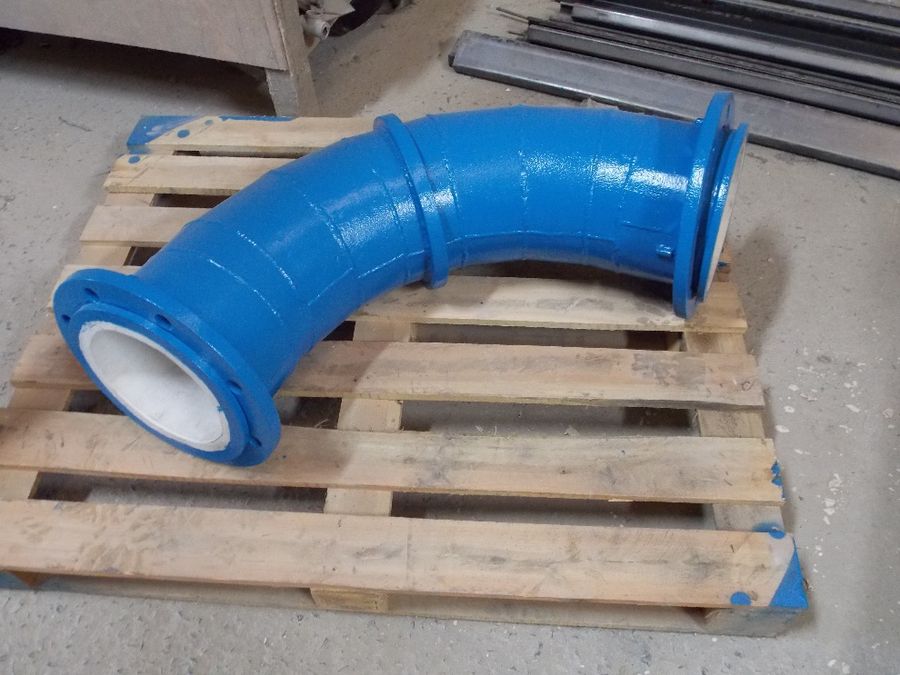
- Lined pipes — pipe and flange in matching sizes to the original assembly, ready to bolt into the existing line.
- Elbows and bends — the highest-attack point of the line, with lining reinforced at the impact position.
- T and Y branches — rectangular box outside, round internal profile, with no weak points at the joints.
- Reducers and cones — transition pieces matching the original equipment geometry, with no flow restriction.
- Ducts and lining of existing piping — 100% ceramic internal protection, including rectangular ducts.
Material: CT CEDUR alumina
CETARCH lines are built with the CT CEDUR family — technical alumina sintered above 1,600 °C, virtually free of glassy phase. For conveying abrasives, the most used formulations are CT CEDUR 94HH (high abrasion) and 96HH (abrasion + impact from larger particles); for chemically aggressive streams, the high-purity 99HH.
Where it is applied
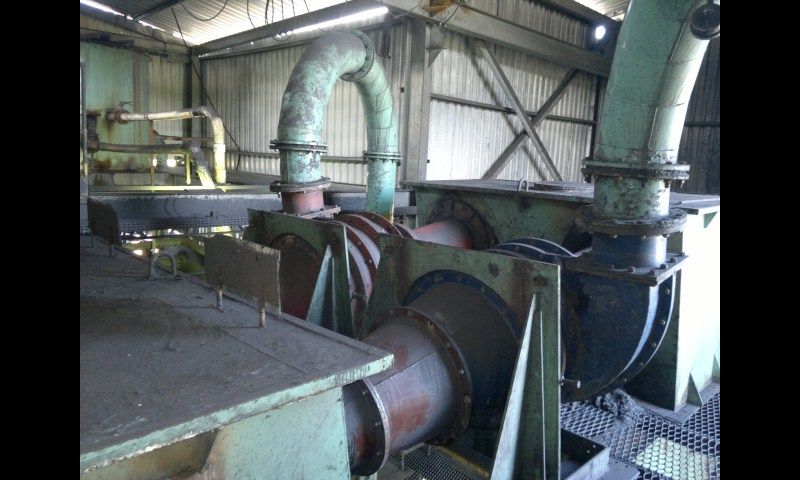
- Mining — slurry, tailings and concentrate lines.
- Cement — pneumatic conveying of raw meal, clinker and coke.
- Energy and agribusiness — pulverized coal, ash, grain, fertilizers and feed.
How we develop your line
- Diagnosis — analysis of the wear point, the conveyed material, the flow and the operating conditions.
- Engineering — geometry and ceramic formulation defined from the line drawing or a reference part.
- Manufacturing — forming, sintering in in-house kilns and precision grinding.
- Application — delivery, installation support and field performance follow-up.
Frequently asked questions
Does the ceramic lining reduce the usable bore of the line?
No — the design keeps pipe and flange in matching sizes to the original assembly, with no reduction of flow areas and no process change. The lined part arrives ready to bolt in place of the metal one.
Is it worth lining only the elbows?
Often, yes: elbows concentrate the wear of the line and usually define the shutdown. Starting with the critical bends and branches is the fastest way to gain uptime — and the rest of the line can be lined in stages, following your maintenance plan.
Which sizes and geometries do you manufacture?
Manufacturing is 100% custom: pipes, elbows, T and Y branches, reducers and ducts are produced from your equipment drawing or a reference part, in any size the project requires.