Abrasion + corrosion: the paper mill's double attack
In a pulp and paper circuit, wear rarely comes alone. The pulp carries fibres and abrasive mineral fillers — such as kaolin and carbonate — that erode pumps, piping and friction points. At the same time, bleaching stages use aggressive chemicals that corrode metal alloys from within. Materials that handle one front well usually fail on the other, and the result is component replacement at every shutdown.
Technical ceramics tackle both problems with a single material: alumina has 9 Mohs hardness and over 1,300 HV — pulp barely wears it — and is inert to aggressive acids, alkalis and solvents, with no corrosion and no contamination of the processed product. A wear-resistant ceramic lining can multiply by 10 the service life obtained with alloys such as Ni-Hard.
Where ceramics are applied in pulp and paper
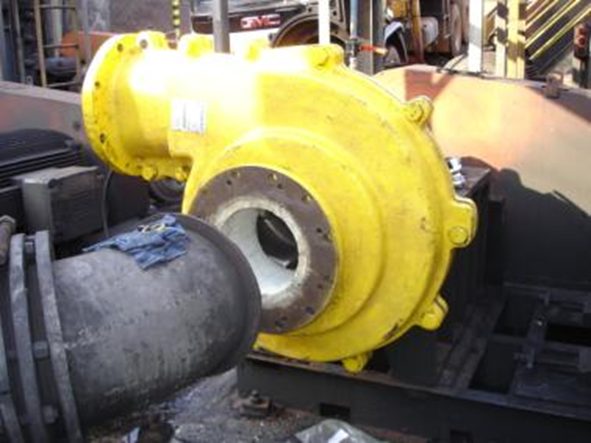
- Pulp pumping — pump casings, impellers and volutes protected against the continuous erosion of fibres and fillers.
- Bleaching lines — piping and components in contact with aggressive chemicals, with no corrosion and no contamination.
- Mineral filler preparation — kaolin, carbonate and other abrasives in conveying and dosing.
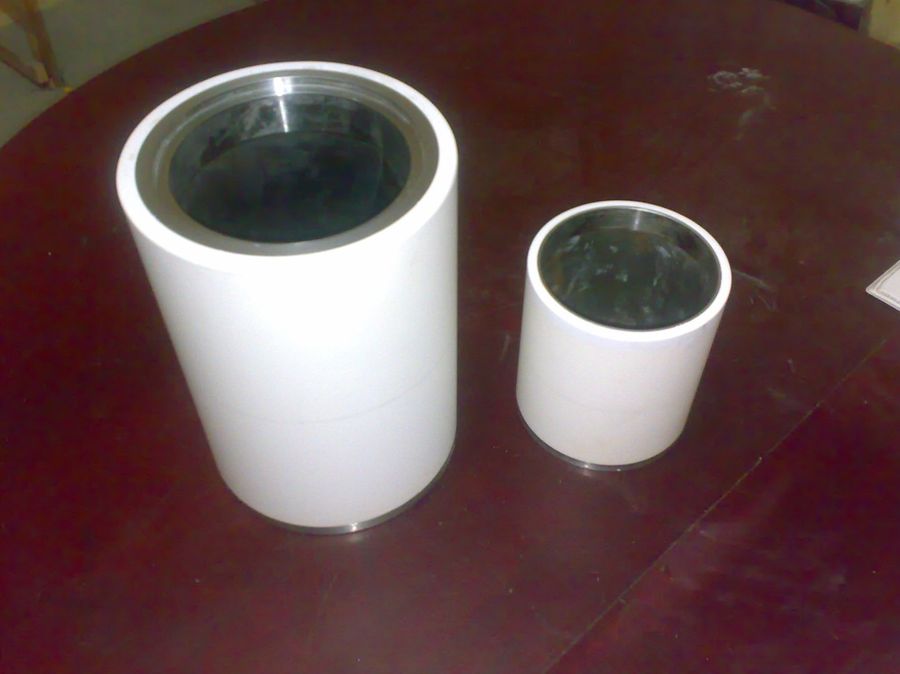
- Friction points — ceramic bushings and sleeves on shafts and bearings running in abrasive media.
Components we supply
- Lined pumps — slurry-pump casings and components in solid ceramic.
- Ceramic-lined pipes and elbows — pulp and filler transport, pipe and flange in matching sizes.
- Ceramic bushings and sleeves — bearings, shafts and pumps with maximum wear resistance.
- Custom linings — chutes, ducts and any wear point of the process.
Paper mills are among the clients running CT CEDUR components — alongside names such as Vale, Votorantim and Braskem in other heavy-industry sectors.
Material: CT CEDUR alumina
For pulp and paper, CETARCH starts from the CT CEDUR line — technical alumina sintered above 1,600 °C, virtually free of glassy phase. Where chemical attack dominates, the high-purity CT CEDUR 99HH (99.5-99.7% Al₂O₃) is the choice; for pure abrasion from fillers and pulp, the 94HH. Engineering defines the composition from an analysis of your process.
FAQFrequently asked questions
Do the ceramics resist bleaching chemicals?
Yes. Alumina is inert to aggressive acids, alkalis and solvents under typical process conditions — it does not corrode like metal alloys. For the most severe chemical stages, the high-purity CT CEDUR 99HH formulation is the recommendation.
Can the ceramic contaminate the pulp or the paper?
No. Being chemically inert, the ceramic releases no residues and does not contaminate the processed product — a direct advantage over metals that corrode and shed particles into the flow.
Do I need to replace my existing pumps and piping?
No. Parts are custom-made from the drawing or a reference part of your equipment — existing pumps, piping and bushings receive the lining or the equivalent ceramic part without changing the process.